Electronics & Communication Gate Yearwise
Electronics and Communication Gate 2013 Set-2 Questions with Answer
Ques 53 Gate 2013 SET-2
Let U and V be two independent and identically distributed random variables such that P(U = +1) = P(U = -1) = 1/2. The entropy H(U + V) in bits is
Ques 54 Gate 2013 SET-2
Let U and V be two independent zero mean Gaussian random variables of variances 1/4 and 1/9 respectively. The probability P(3V ≥ 2U) is
Ques 55 Gate 2013 SET-2
The impulse response of a continuous time system is given by h(t) = δ(t - 1) + δ(t - 3). The value of the step response at t = 2 is
Ques 56 Gate 2013 SET-2
A system is described by the differential equation
d2y/dt2 + 5dy/dt + 6y = x(t).
Let x(t) be a rectangular pulse given by
x(t) = 1, 0 < t < 2
x(t) = 0, otherwise
Assuming that y(0) = 0 and dy/dt = 0 at t = 0, the Laplace transform of y(t) is
Ques 57 GATE 2013 SET-2
For a periodic signal v(t) = 30 sin100t + 10 cos300t + 6 sin(500t + π/4), the fundamental frequency in rad/s is
Ques 58 GATE 2013 SET-2
A band-limited signal with a maximum frequency of 5 kHz is to be sampled. According to the sampling theorem, the sampling frequency which is not valid is
Ques 59 GATE 2013 SET-2
Which one of the following statements is NOT TRUE for a continuous time causal and stable LTI system?
Ques 60 GATE 2013 SET-2
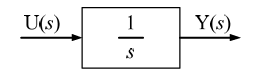
Assuming zero initial condition, the response y(t) of the system given below to a unit step input u(t) is
Ques 61 Gate 2013 SET-2
Let g(t) = e-πt2, and h(t) is a filter matched to g(t). If g(t) is applied as input to h(t), then the Fourier transform of the output is
Ques 62 Gate 2013 SET-2
Two systems with impulse responses h1(t) and h2(t) are connected in cascade. Then the overall impulse response of the cascaded system is given by
Ques 63 Gate 2013 SET-2
The impulse response of a system is h(t) = tu(t). For an input u(t-1), the output is
Ques 64 Gate 2013 SET-2
A system described by a linear, constant coefficient, ordinary, first order differential equation has an exact solution given by y(t) for t > 0, when the forcing function is x(t) and the initial condition is y(0). If one wishes to modify the system so that the solution becomes -2y(t) for t > 0, we need to
Ques 65 Gate 2013 SET-2
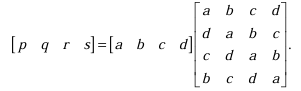
The DFT of a vector [a b c d] is the vector [α β γ δ]. Consider the product

Total Unique Visitors